MedSafe Diet
2 Week design sprint - Healthcare space
June 2026
A calm, AI-native companion that helps adults check whether their food, medication, and supplements are safe to combine - and understand why.
In short
I revisited the first brief I ever designed, a medication food interaction checker, and rebuilt it end to end with a more refined strategy and an AI-augmented process. The core insight: the interaction data already exists; what's missing is translation, trust, and confidence. So I designed for the ten-second moment of "is this okay?" - a conversational, plain-English, 'calm' by default tool - and pressure-tested every screen against five research-backed principles.

The brief and why I came back to it
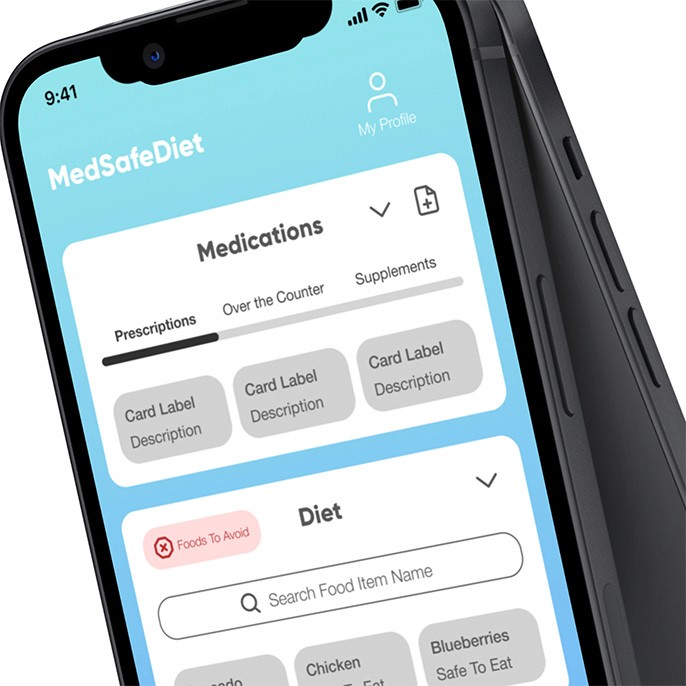
During my Experience Haus UX/UI Design development course I was given my first design brief - MedSafe Diet. We met a junior Doctor called Oliver who, with his real first hand clinical insight, proceeded to explain a genuine problem he was concerned about in the healthcare space. People routinely combine medications and foods that interact badly and theres no accessible consumer tool to check.
On the bootcamp I only had 2 weeks, the bare Figma basics and being honest i think there were 'too many cooks in the kitchen' when it came to the group research phase. Two years of professional experience later, i'm rebuilding it properly, keeping the valuable parts of the original research but taking a fresh up to date approach on the delivery strategy, and using it as an experiment in designing with AI (Claude for thinking and Claude Design for building).
The problem
Adults managing ongoing medication can't easily find out whether what they eat and take is safe to combine. The trustworthy information is too clinical to understand, and the understandable information is too unreliable to trust.
The reframe that shaped everything: this isn't a missing-database problem. The data lives in sources like DrugBank and OpenFDA. The gap is translation, trust, and confidence — which is why the product is an experience layer, not a data product.
rewrite.
What the research told me
Competitive landscape & the opportunity
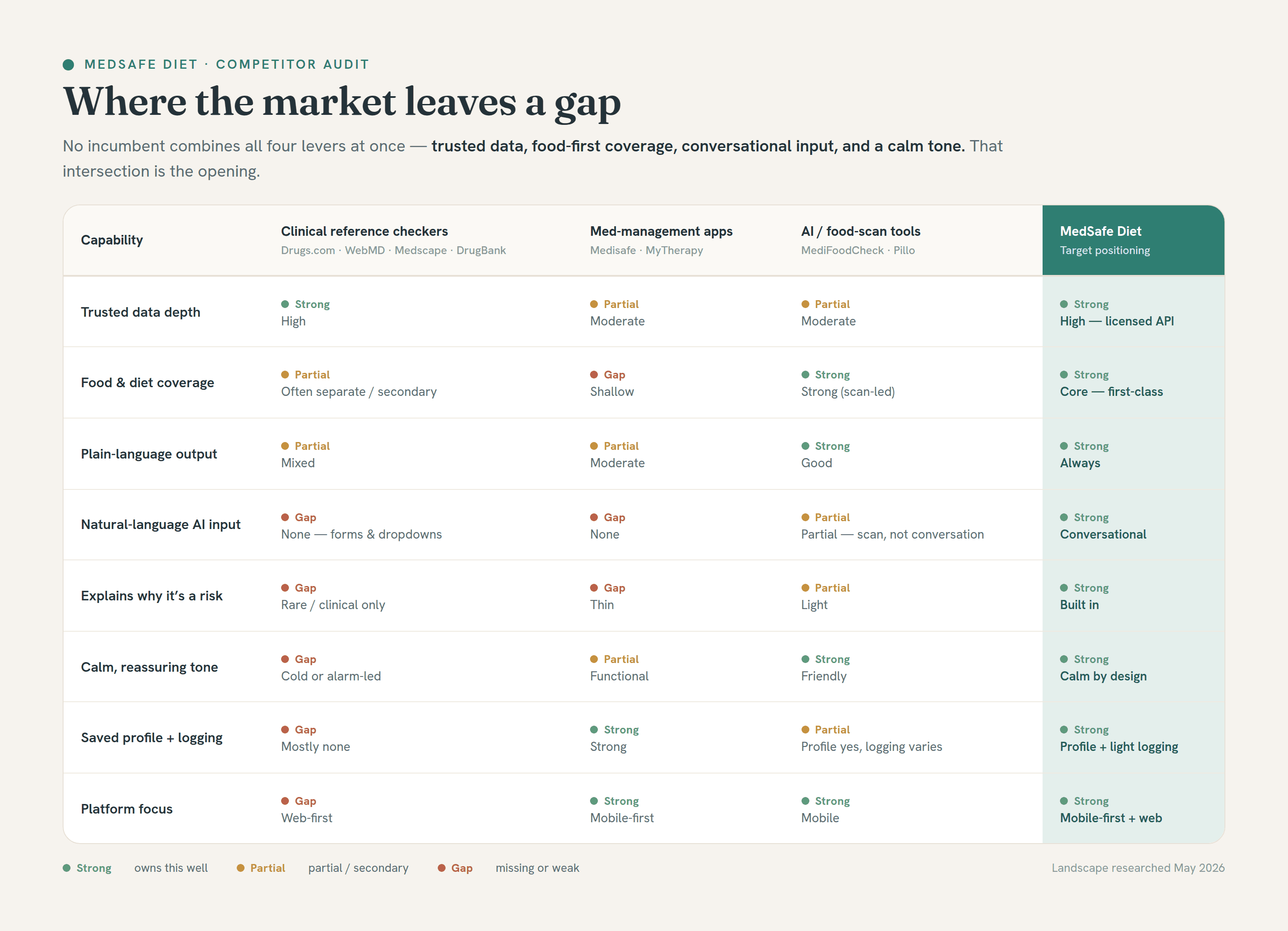
The market splits into three clusters — none owns the target space.
Clinical reference checkers (Drugs.com, WebMD, DrugBank): great data, cold and transactional, built for clinicians.
Medication managers (Medisafe, MyTherapy): own the daily reminder habit, but interactions are a bolt-on, food coverage is shallow, nothing is conversational.
AI / food-scan tools (MediFoodCheck, Pillo): closest to the vision, but lead with the barcode — answering "what's in front of me," not the human question "can I eat grapefruit on this?"
Strategy
Personas
Journey maps
Design Principles
App structure

Wireframes and the decisions behind them
Pressure test & iteration
Visual direction
Clarity

Calm

Companion

High fidelity & Prototype


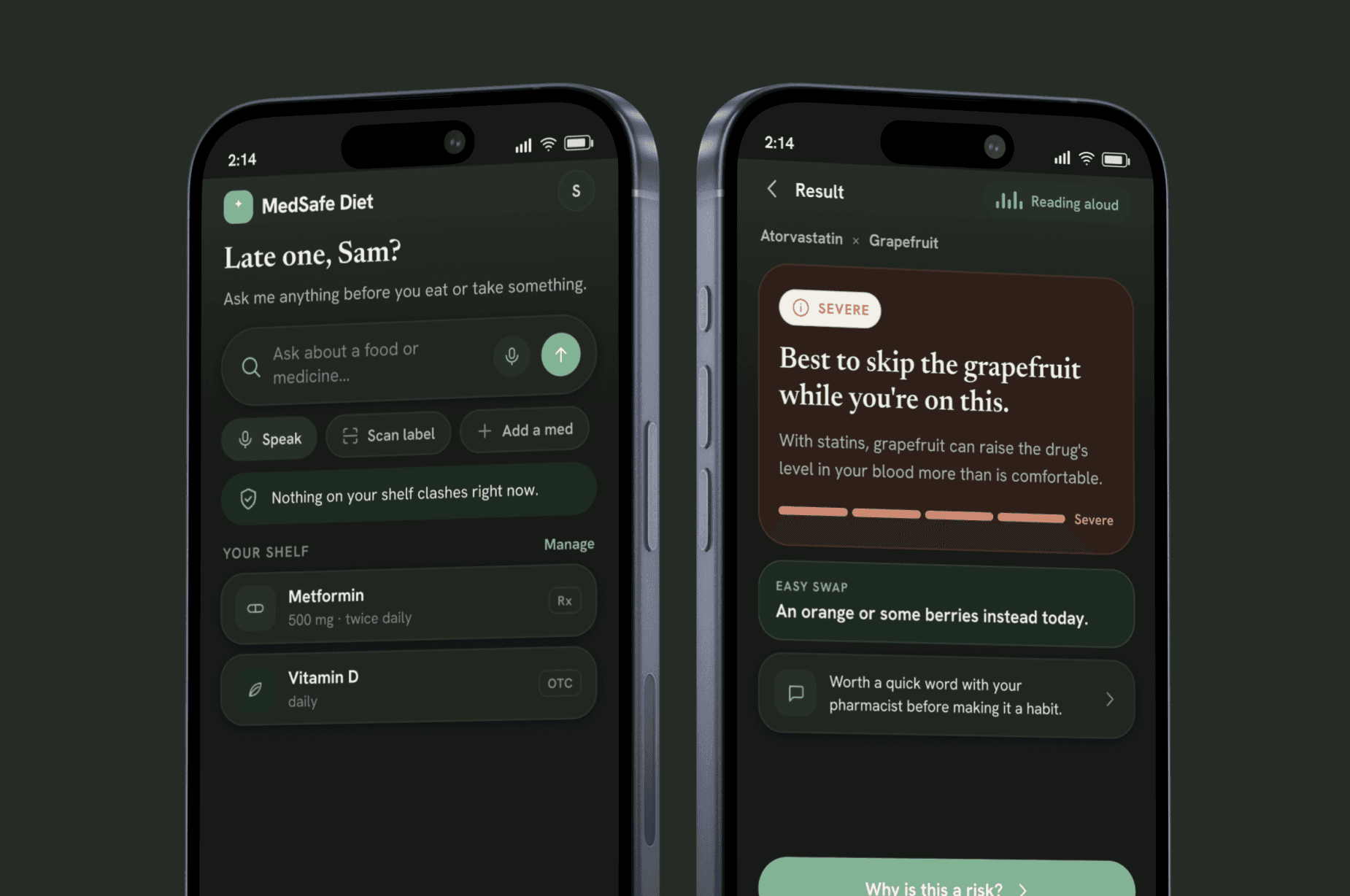
Dark mode


Web companion
